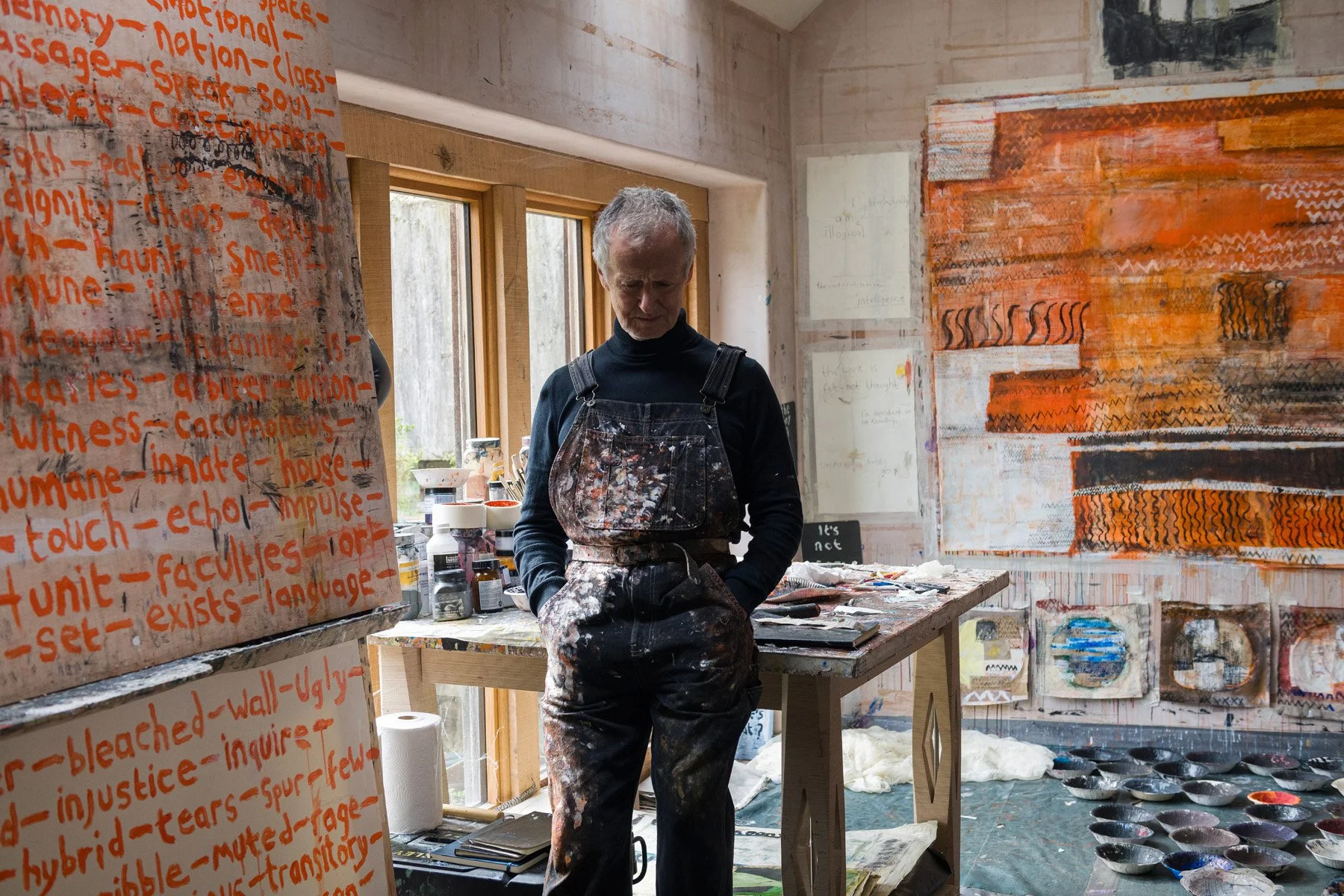
About Anthony
Anthony Corner is a graduate of Chelsea School of Art and the Royal College of Art. He was artist in residence at the Royal Opera House, Covent Garden, and has designed sets and costumes for opera. His work has been exhibited extensively, including in Venice and at the Royal Academy London and has been acquired by numerous private collections, including Citi Bank, the Groucho Club and overseas collectors. He has taught drawing to undergraduate and postgraduate level. He lives and works in London and Oxfordshire. Corner’s other publications include The boy in a box (exhibition catalogue), 2017. Filthy worms and curtain walls, 2019. Lamentation, flux and an empty bladder (exhibition catalogue), 2020.
Should you wish to contact Anthony please email info@veniceartfactory.org
Artist’s Statement
My practice tends not to be influenced by visual art but rather the way that poetry sounds. It’s how poetic text uses the subtleties and nuances of the spoken word. It’s the poetry in a foreign language you don’t understand or the way that a musical phrase can convey harmony, balance and discord. It’s the way as Harris argues “Communication proceeds by means of sign” (Harris, 1998), the rhyme and rhythm of sound. My practice is concerned with the imagined sound a mark makes, the imagined language of a mark, and how linguistic language is so often inadequate. It’s the beauty of a single mark that chases elusive abstract qualities. That simple mark and phrase that carries an “oh my goodness” eloquence which is far more sophisticated and empathetic than a complex set of phrases. It’s how one mark relates to another, the nature of the space in between. This thinking about the spaces between has been influenced by Gaston Bachelard’s seminal text “The Poetics of Space” (Bachelard, 1958). It’s the intricate interconnections, alliances and integrational features and characteristics of the marks. I have consistently explored these ideas through works on paper. This installation investigates the ideas surrounding repetition, aesthetics, the articulate nature of marks, the felt not thought of the act of making. Every repetitious element is different. I simply watch what unfolds before me. In the work, the marks, the materials, the investigations all combine. “Thus, we cover the universe with drawings we have lived. These drawings need not be exact. They only need to be tonalised on the mode of the inner self” (Bachelard, 1958).
Anthony’s Studio
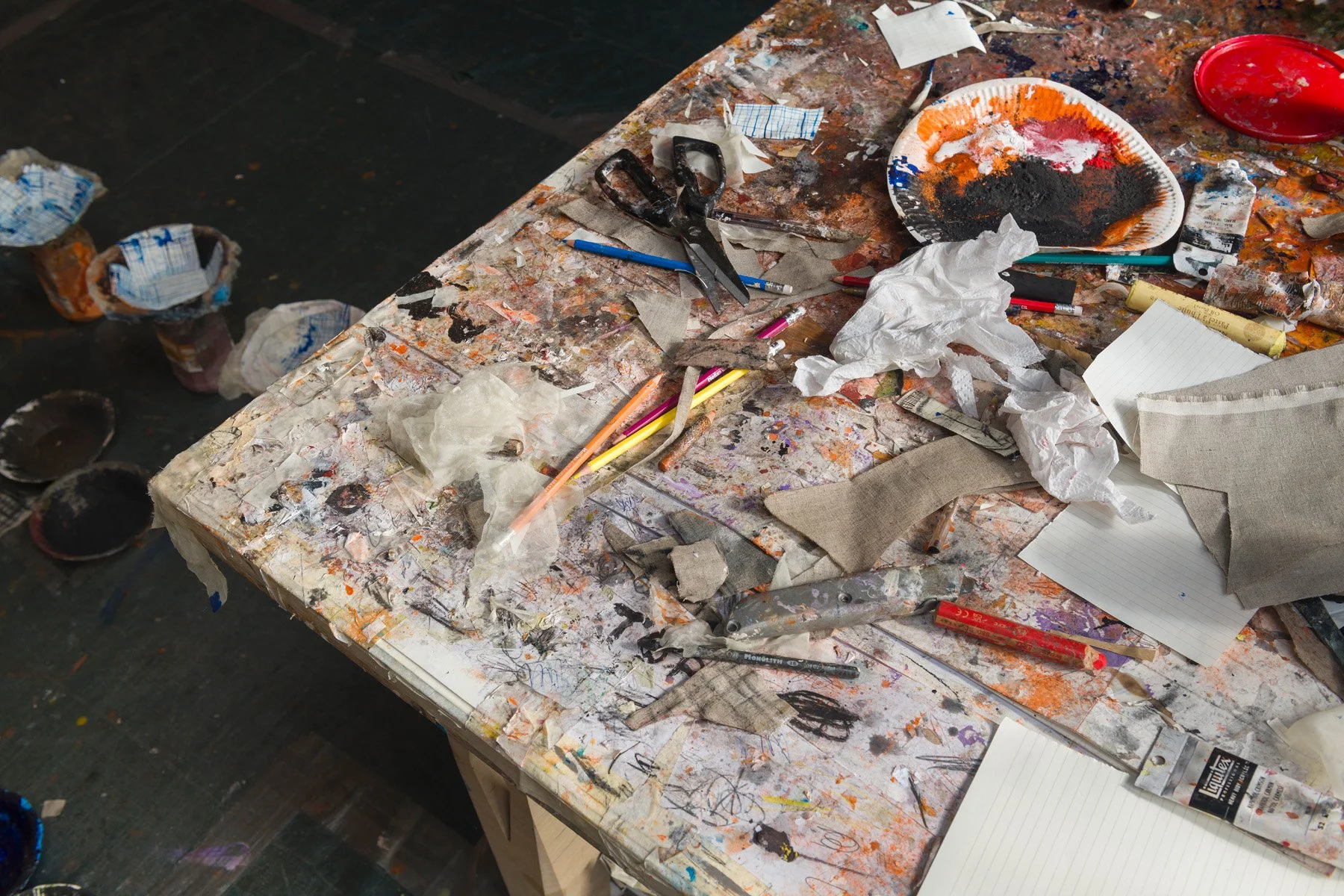
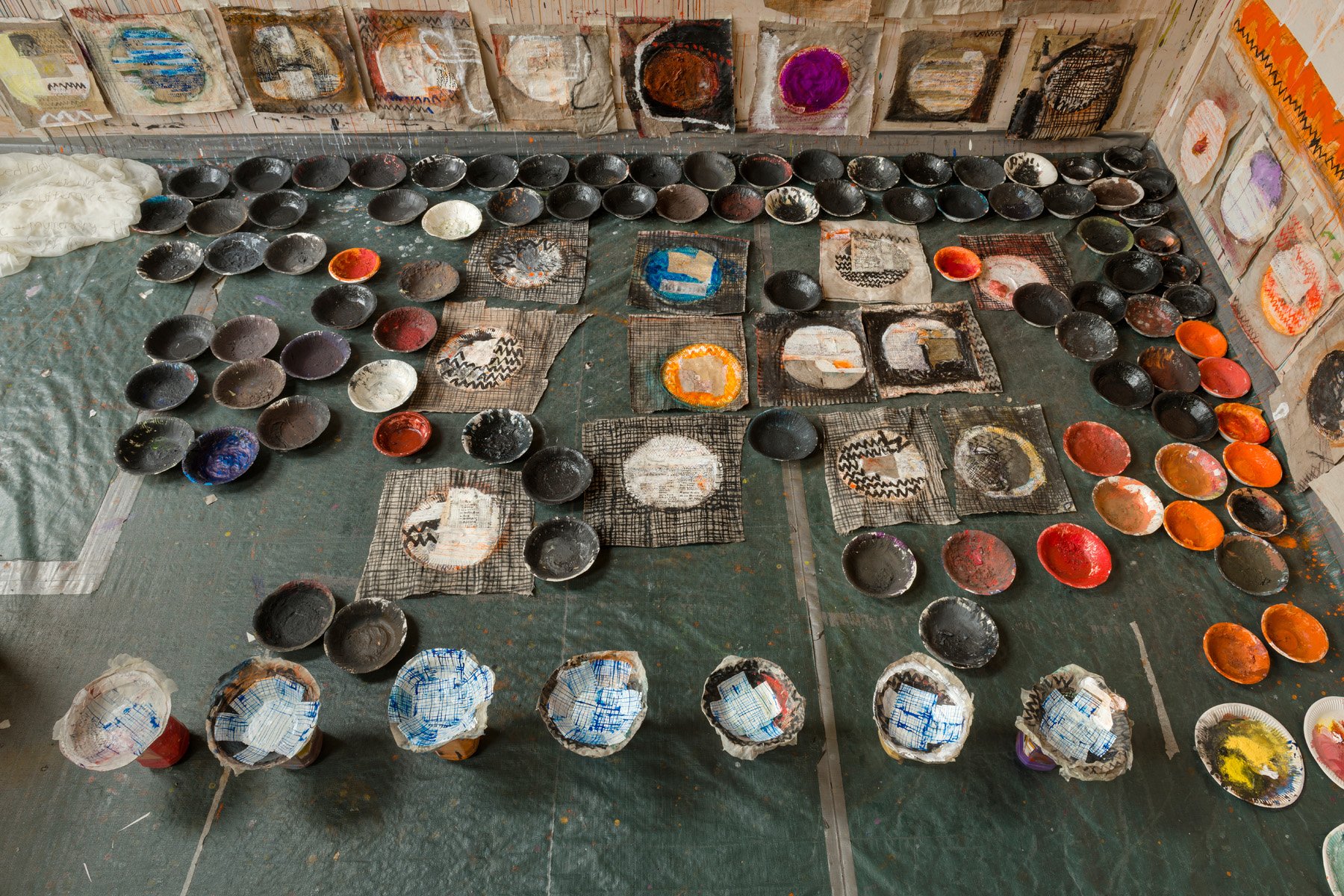
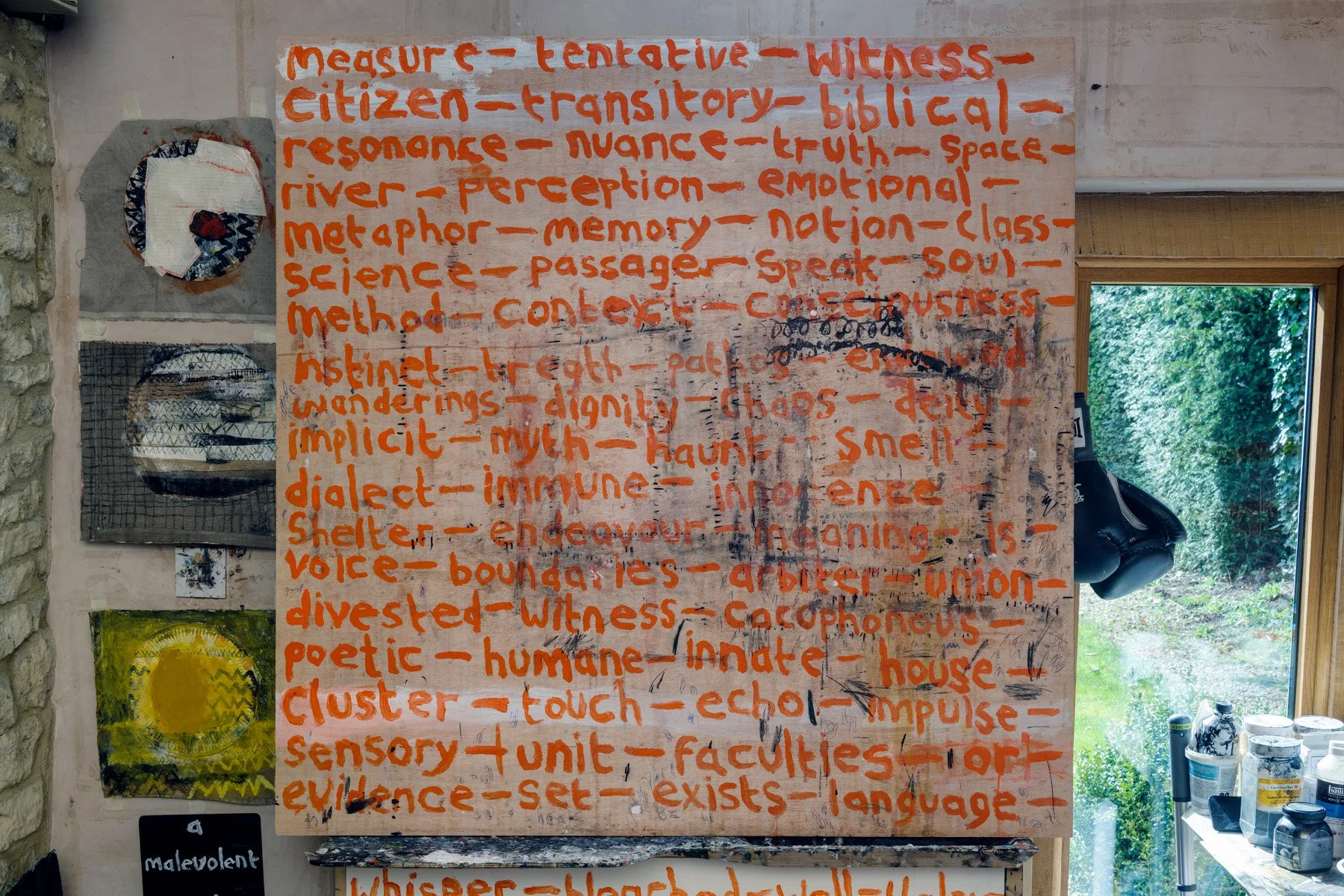
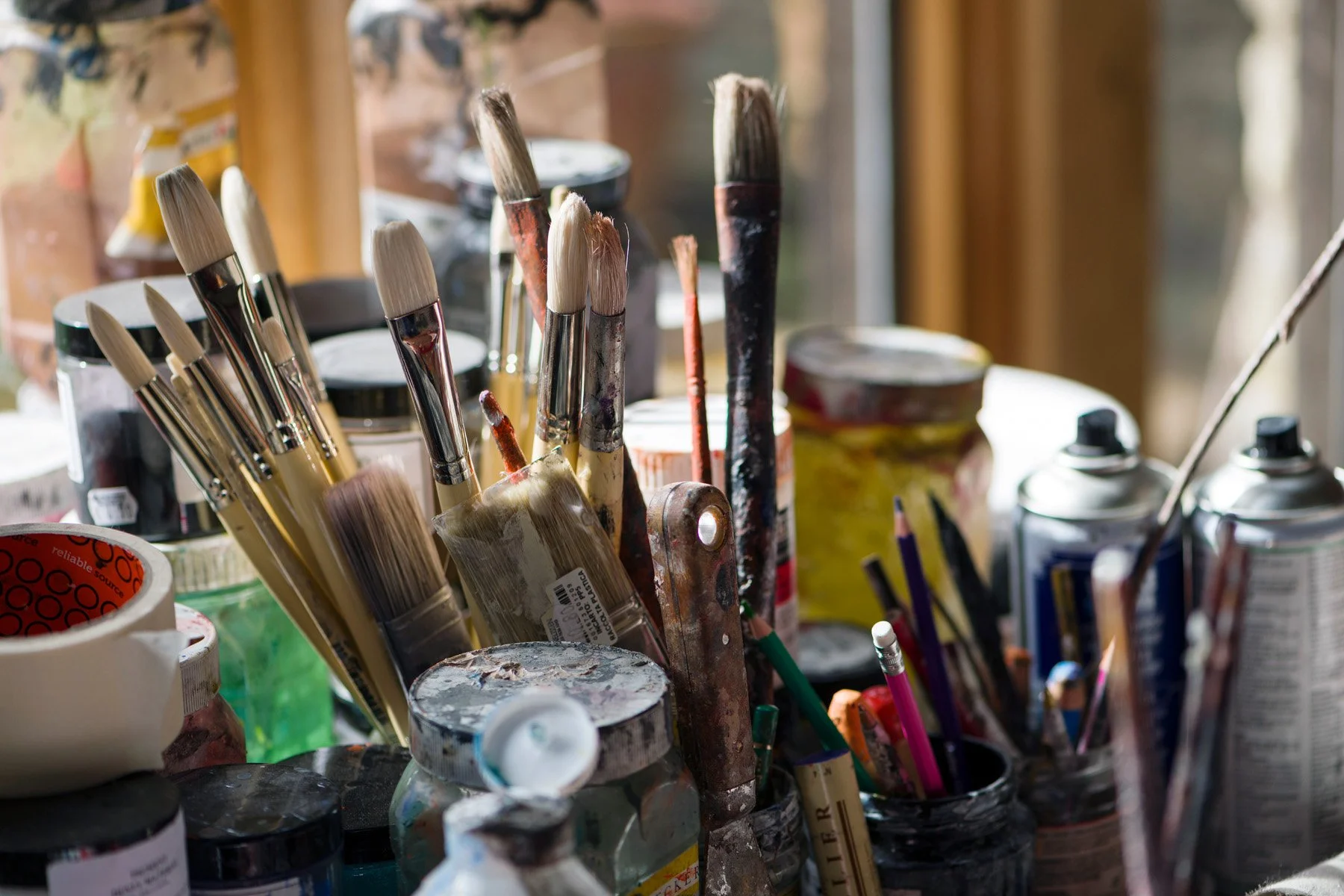
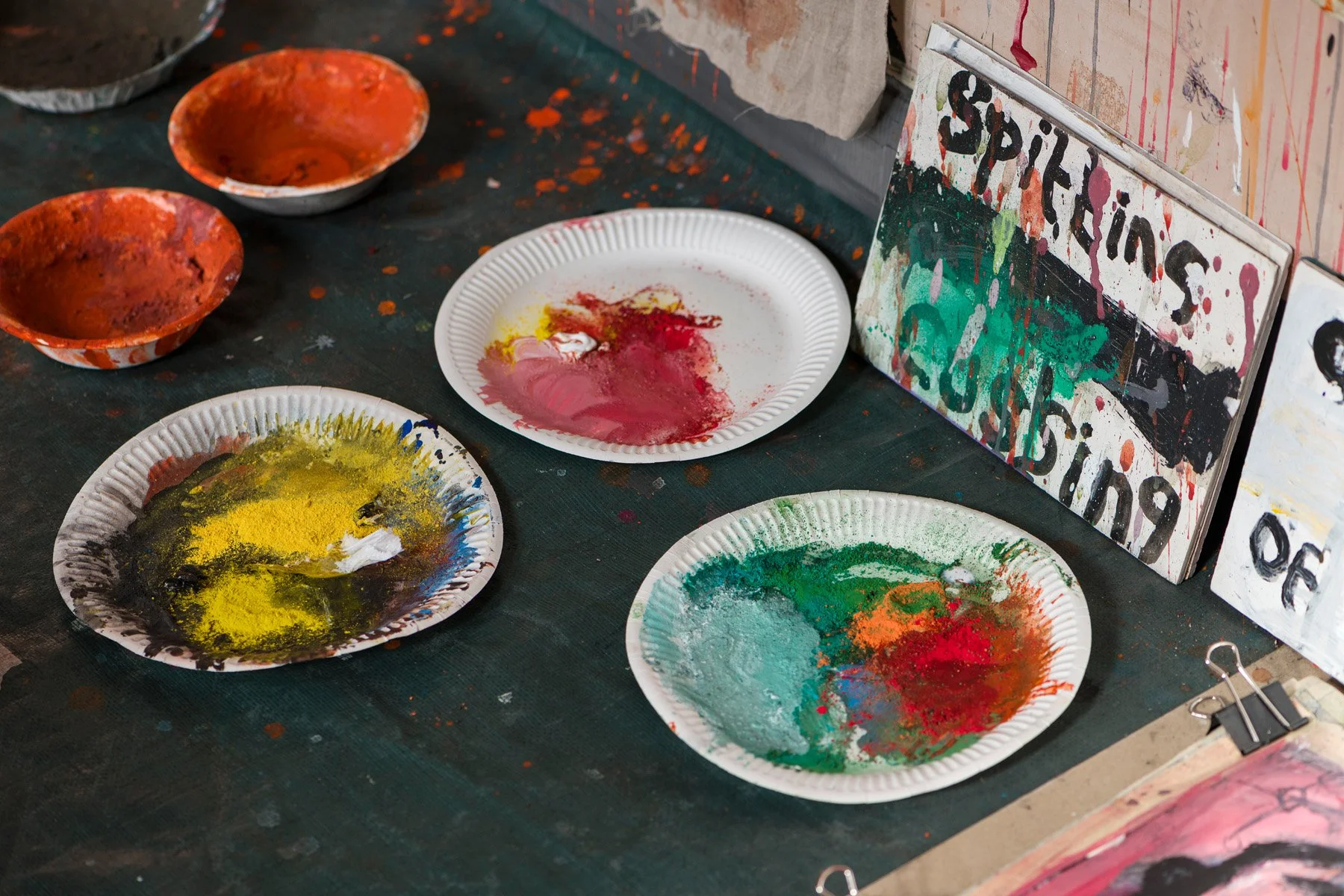
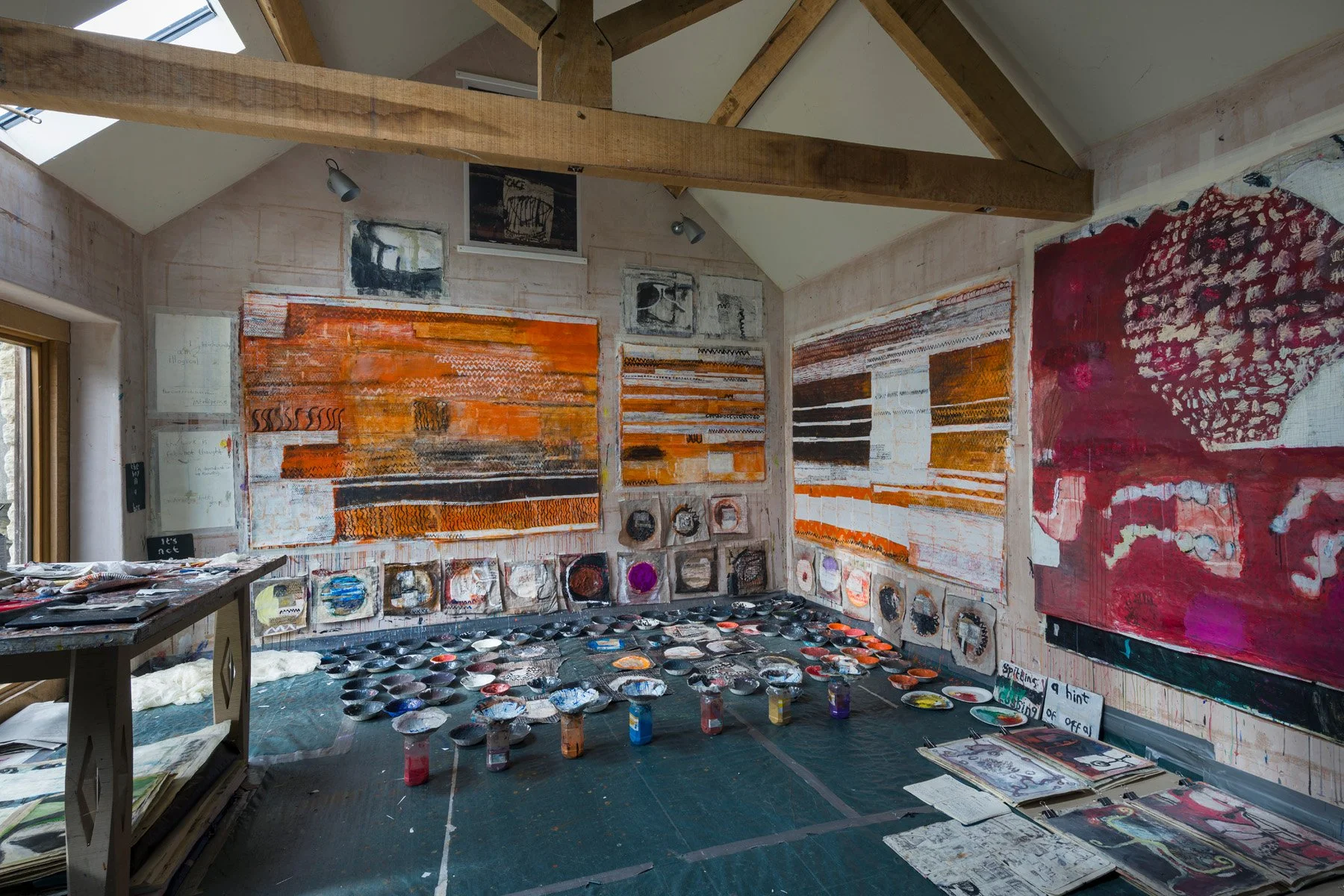
Anthony's studio is at his home in Oxfordshire. These images were taken there: work in progress, materials and workings, rather than finished pieces in a gallery.
Collaborators
Francesca and Luca
Francesca Giubilei and Luca Berta are two independent curators based in Venice, Italy. They have collaborated with Anthony on a number of exhibitions.
Francesca Giubilei (1982), graduated in Contemporary Art History and in Economics and Management of the Arts (Ca’ Foscari University), is an independent curator and conceiver of cultural initiatives. From 2008, she is responsible for the development of cultural projects and exhibitions related to the promotion of contemporary art in glass. In 2027 Giubilei will publish the book “Il vetro, un impulso immaginativo per l’arte contemporanea (Glass, an imaginative impulse for contemporary art)”.
Luca Berta (1976), PhD in theory and text analysis (University of Bergamo), is a curator, writer and philosopher, author of scientific papers on international journals and several books about art, aesthetics and the philosophy of mind, among which “Dai Neuroni alle Parole” [“From Neurons to Words. How language has reshaped the sensory experience”], Mimesis, Milan 2010; and “In Bed with Mona Lisa. Contemporary Art for Commuters and Curious Minds”, Studio LT2-Central Books, London 2014 (written with Carlo Vanoni). He has taught Phenomenology of Contemporary Art at the IUSVE University in Venice.
Together, they have curated exhibitions in museums and cultural institutions, as well as official events at the Venice Biennale.
Hannah and Holly
Hannah Clayton and Holly McConnell-Whitehead are co-directors of Culture Change Works, a consultancy specialising in communications, evaluation and organisational development for the arts, culture, heritage and higher education sectors. In recent years they have worked with Anthony to support the development of his publications and this website.
Together, they help artists and cultural organisations shape how their work is presented, written about and shared with audiences.